On-page optimization

The advantages of professional on-page optimization

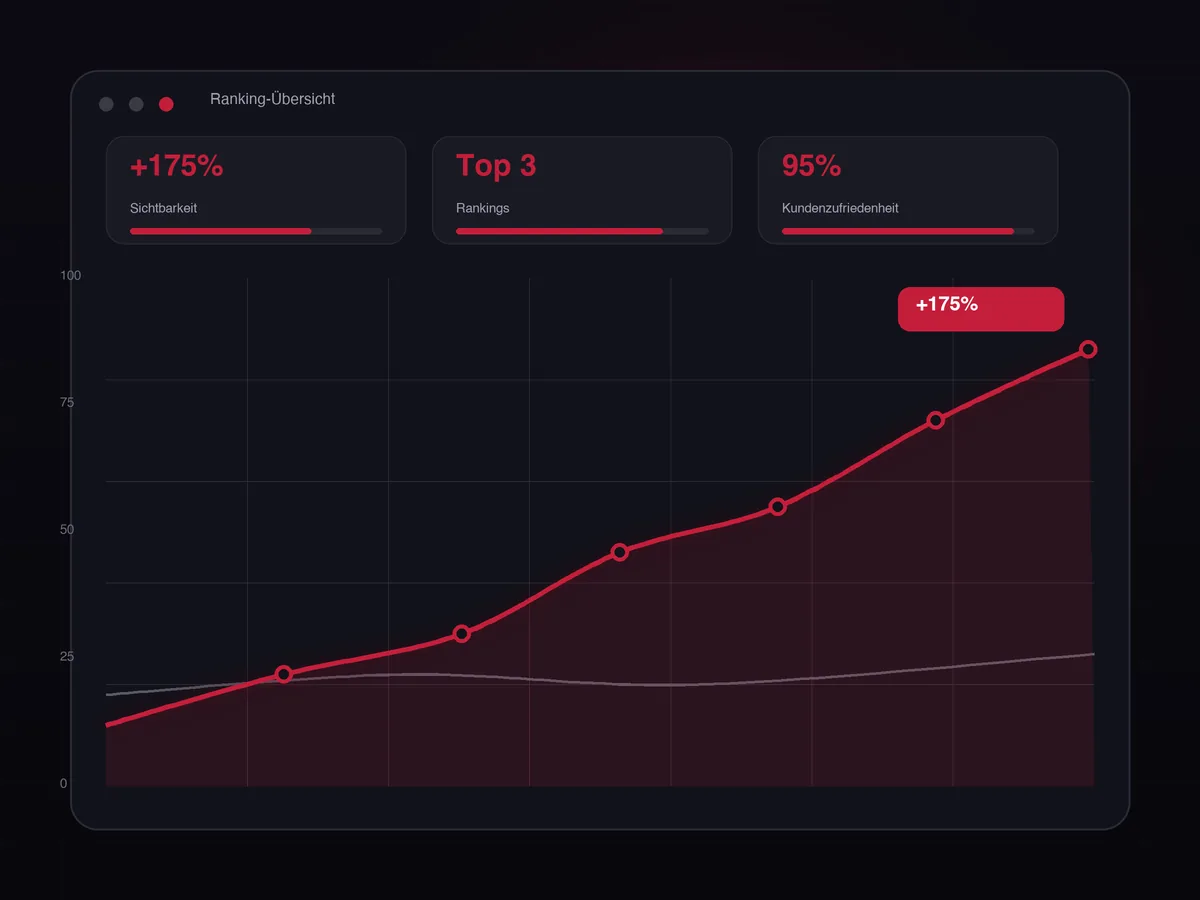
Our tailored on-page strategies increase your website's visibility, attract qualified visitors, and boost your conversion rate. From improved Google rankings and optimized user experience to enhanced brand credibility – every aspect of our SEO measures delivers measurable results.

Professional on-page optimization for top rankings

Professional on-page optimization will sustainably increase your website's visibility. We optimize keywords, meta tags, internal links, content structure, and technical factors to improve your site's Google ranking and attract more qualified traffic.

Free consultation

Contact us for a free, no-obligation analysis of your website.

Improved Google rankings

Optimized user experience

Higher click rates

Improved content relevance

More organic traffic

Faster loading times

STEP-BY-STEP SEO STRATEGY

01

SEO
Audit

We analyze the condition, structure, and backlinks of your website to identify problems and opportunities.

02

Keyword
research

We find and analyze high-quality keywords to develop a targeted search strategy that will impact your industry.

03

On-Page
optimization

We optimize content, meta tags, internal links and the page structure to improve relevance and readability for search engines.

04

High-quality
Link building

We build high-quality white-hat backlinks through outreach, partnerships, and content placements to strengthen your domain authority.

What is on-page optimization?

On-page optimization (also known as on-page SEO) encompasses all measures taken directly on your website to improve its ranking in search engines like Google. Unlike off-page optimization, which focuses on external factors such as backlinks, on-page optimization optimizes elements that you have complete control over.

This includes the strategic placement of relevant keywords in titles, meta descriptions, and content; optimization of the URL structure; improvement of page load speed; mobile optimization; and the creation of high-quality, user-oriented content. Technical aspects such as internal linking, image optimization with alt tags, and the implementation of schema markup also play a crucial role.

Professional on-page optimization ensures that search engines can better understand and categorize your website, while simultaneously improving the user experience. The result: better rankings, more organic traffic, and higher conversion rates.

The most important on-page factors for top rankings

Keyword optimization: The strategic placement of relevant keywords is fundamental. Keywords should naturally be included in H1 headings, meta titles, meta descriptions, the first 100 words of the content, and subheadings (H2-H6). Remember: quality over quantity – keyword stuffing harms your ranking.

Title tags and meta descriptions: The title tag is one of the most important on-page factors. It should be 50-60 characters long and contain the main keyword. While the meta description (150-160 characters) doesn't directly influence the ranking, it does affect the click-through rate (CTR), which in turn is a ranking signal.

Content quality and length: High-quality, unique content that fulfills the search intent is crucial. Longer, more comprehensive articles (1,500+ words) often rank better because they cover topics in greater depth. Semantic relevance is important – use LSI (Latent Semantic Indexing) keywords and thematically related terms.

URL structure: Short, descriptive URLs containing the main keyword improve both user understanding and crawlability. Avoid special characters and long number sequences.

Internal linking: A well-structured internal linking system distributes link equity (PageRank) across your website and helps search engines understand the hierarchy and importance of your pages. Use meaningful anchor text.

Image optimization: Images should be compressed (for fast loading times), have meaningful file names, and be provided with alt tags, which are important for both accessibility and image SEO.

Frequently asked questions about on-page optimization

The cost of on-page optimization varies depending on the size of your website and your specific requirements. A one-time basic optimization typically starts at €1,500-€3,000, while ongoing support is available with monthly packages starting at €500. Contact us for a customized quote.

You can see initial improvements after just 2-4 weeks. Significant ranking increases typically appear after 3-6 months. SEO is a long-term process – sustainable results require continuous optimization and patience.

On-page optimization encompasses all measures taken directly on your website (content, technology, structure). Off-page optimization focuses on external factors such as backlinks and social signals. Both areas complement each other and are essential for successful SEO.

You can implement basic measures like content optimization yourself. However, for technical aspects (structured data, page speed, core web vitals) and strategic keyword research, professional support is recommended to achieve optimal results.

The most important factors are: high-quality, relevant content; optimized title tags and meta descriptions; clean URL structure; fast loading times; mobile optimization; internal linking and technical SEO basics such as schema markup.

Technical SEO: Performance and Core Web Vitals

Page Speed Optimization: Loading speed is a direct ranking factor. Google favors websites that load quickly. Optimize images (WebP format), minimize CSS/JavaScript, utilize browser caching, and implement a Content Delivery Network (CDN). Goal: Under 3 seconds loading time.

Core Web Vitals: Google evaluates three key metrics: Largest Contentful Paint (LCP) measures how quickly the main content loads (target: under 2.5 seconds). First Input Delay (FID) measures interactivity (target: under 100 milliseconds). Cumulative Layout Shift (CLS) measures visual stability (target: under 0.1).

Mobile-first indexing: Google primarily indexes the mobile version of your website. Responsive design is essential. Test your site with Google's Mobile-Friendly Test. Ensure touch-friendly buttons and legible font sizes without zooming.

SSL/HTTPS: A secure connection has been a ranking factor since 2014. Install an SSL certificate and redirect all HTTP URLs to HTTPS. Browsers mark insecure sites as dangerous – this harms user experience and trust.

Your on-page optimization checklist

☑ Optimize title tag (50-60 characters, include main keyword)
☑ Create a meta description (150-160 characters, include a call to action)
☑ H1 heading with main keyword (only one H1 per page)
☑ Use H2-H6 subheadings in a structured way
☑ Distribute keywords naturally throughout the text (avoid over-optimization)
☑ Content length: at least 1,000-1,500 words for important pages
☑ Compress images (prefer WebP format)
☑ Add alt tags for all images
☑ Use descriptive URLs (short and with keywords)
☑ Internal linking with meaningful anchor text
☑ Keep page speed below 3 seconds
☑ Test mobile responsiveness
☑ Activate SSL certificate (HTTPS)
☑ Optimize Core Web Vitals (LCP, FID, CLS)
☑ Implement schema markup for rich snippets
☑ Create an XML sitemap and submit it to Google
☑ Configure Robots.txt
☑ Fix 404 errors and set up redirects
☑ Ensure accessibility (WCAG 2.1 standards)
☑ Use sufficient color contrasts (at least 4.5:1)
☑ Enable keyboard navigation
☑ ARIA labels for interactive elements
☑ Descriptive link text (no “Click here”)
☑ Provide subtitles for videos

Accessibility in on-page optimization

Accessibility is an essential but often neglected aspect of on-page optimization. Websites designed with accessibility in mind not only offer an optimal user experience for all users – including people with disabilities – but are also positively evaluated by search engines.

WCAG 2.1 Standards: The Web Content Accessibility Guidelines (WCAG) define international standards for accessible web content. Google prioritizes websites that adhere to these guidelines. The three conformance levels A, AA, and AAA indicate the extent to which accessibility is implemented. The goal should be at least level AA.

Color contrast: Sufficient color contrast between text and background is crucial for readability. The WCAG standard requires a minimum ratio of 4.5:1 for normal text and 3:1 for large text. Tools like the Color Contrast Checker can help with verification.

Keyboard navigation: All interactive elements must be operable without a mouse, using only the keyboard. This is especially important for people with motor impairments. Ensure clear focus indicators and a logical tab order.

ARIA Labels: Accessible Rich Internet Applications (ARIA) labels describe interactive elements for screen readers. Buttons, forms, and dynamic content should be semantically correctly marked up so that assistive technologies can interpret them correctly.

Alternative text: Images need descriptive alt tags that explain the image content for screen reader users. This improves not only accessibility but also image SEO. Decorative images should be marked with an empty alt attribute.

Subtitles and transcripts: Videos should include subtitles for deaf users and ideally transcripts for full accessibility. This also improves SEO, as search engines can index the text content.

Ready for top rankings? Start on-page optimization now!